Hydration Myths: How Much to Drink, and Signs You May Be Under-Hydrated
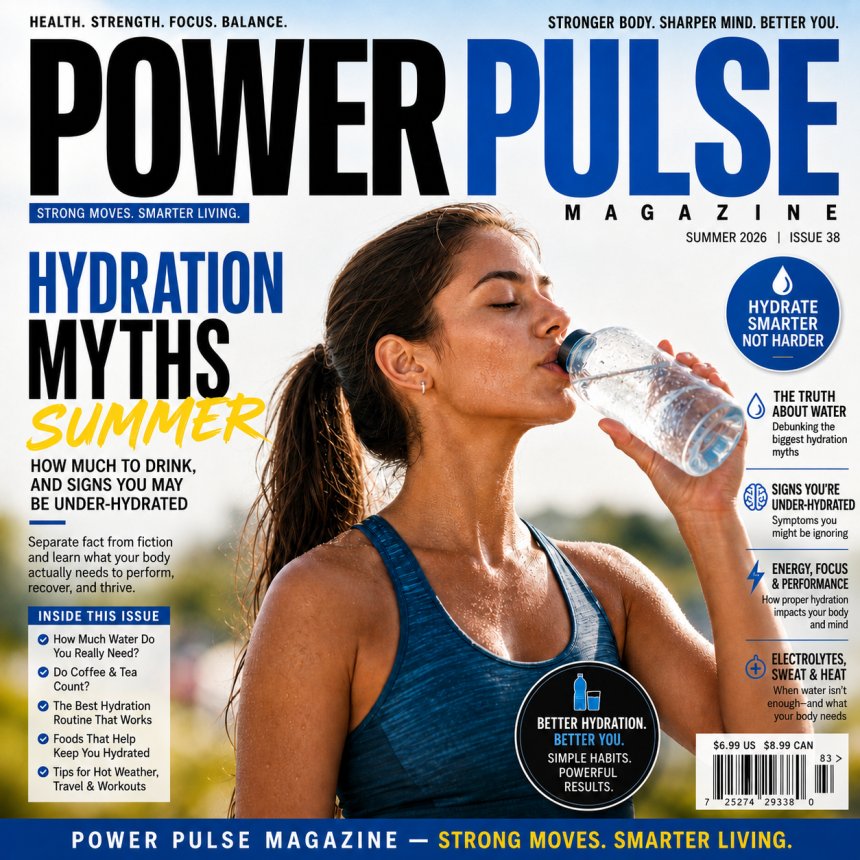
Staying properly hydrated is about more than simply drinking water—it's about understanding what your body truly needs. This issue breaks down common hydration myths, explains how much water you actually need, identifies the warning signs of dehydration, and explores the role of coffee, tea, electrolytes, and water-rich foods. You'll also find practical tips for building healthier hydration habits to improve energy, focus, exercise performance, recovery, and overall wellness throughout the summer.

Hydration Myths: How Much to Drink, and Signs You May Be Under-Hydrated
Summer 2026 Wellness Guide
Category: Health & Wellness
By: Maya Brooks, Lifestyle & Wellness Writer | Power Pulse Magazine
Hydration Myths — Summer 2026
Key Highlights
- Separate Hydration Facts from Fiction
Learn which common hydration beliefs are backed by science and which are simply myths.
- How Much Water Do You Really Need?
Discover why hydration needs vary based on age, activity level, climate, health, and diet instead of relying on the outdated "8 glasses a day" rule.
- Signs You May Be Under-Hydrated
Recognize early warning signs such as persistent thirst, dark urine, headaches, fatigue, dizziness, dry mouth, muscle cramps, and reduced concentration.
- Does Coffee & Tea Count?
Find out how caffeinated beverages contribute to your daily fluid intake and when they may not be enough on their own.
- The Best Daily Hydration Routine
Build healthy hydration habits before, during, and after exercise while maintaining consistent water intake throughout the day.
- Foods That Help Keep You Hydrated
Explore water-rich foods like watermelon, cucumbers, strawberries, oranges, celery, tomatoes, and leafy greens that support hydration naturally.
- Hydration for Summer, Travel & Workouts
Learn practical strategies for staying hydrated during hot weather, long flights, outdoor activities, and intense exercise.
- The Truth About Electrolytes
Understand when electrolytes are beneficial, who actually needs them, and why water alone isn't always enough during prolonged sweating.
- Hydration & Performance
Discover how proper hydration supports physical performance, endurance, muscle function, recovery, mental clarity, focus, and mood.
- Simple Habits, Better Results
Small daily hydration habits can improve energy levels, recovery, productivity, and overall wellness throughout the summer.
Hydration is one of the most talked-about topics in health and wellness, yet it's also one of the most misunderstood. This Summer 2026 guide separates fact from fiction, explaining how much water your body truly needs, the signs of under-hydration, and why there isn't a one-size-fits-all approach. You'll learn how coffee, tea, electrolyte drinks, and water-rich foods fit into healthy hydration, along with practical tips to stay energized, focused, and performing at your best throughout the hottest months of the year.
Editor's Note
Every summer, hydration advice floods social media, television, and wellness blogs. Some recommendations are backed by science, while others become popular simply because they're easy to remember.
At Power Pulse Magazine, we believe good health information should be practical, evidence-informed, and easy to understand. Rather than chasing viral wellness trends, this guide focuses on what actually helps your body stay hydrated, perform efficiently, and recover properly.
Whether you're working outdoors, traveling, hitting the gym, or simply trying to stay healthy during warmer weather, understanding hydration can make a meaningful difference in how you feel every day.
Hydration Myths: Why So Many People Get It Wrong
Hydration has become one of those wellness topics that everyone talks about, but relatively few people fully understand.
Drink more water.
Carry a giant bottle everywhere.
Drink a gallon every day.
Never wait until you're thirsty.
Add electrolytes to everything.
The advice seems endless—and often contradictory.
The reality is much simpler.
Your body needs enough fluids to support circulation, regulate body temperature, transport nutrients, lubricate joints, support brain function, and help every organ work efficiently. However, the amount you need changes daily depending on factors such as your body size, age, activity level, climate, overall health, medications, and even the foods you eat.
There isn't one perfect hydration number for everyone.
That's exactly why many hydration myths continue to confuse people.
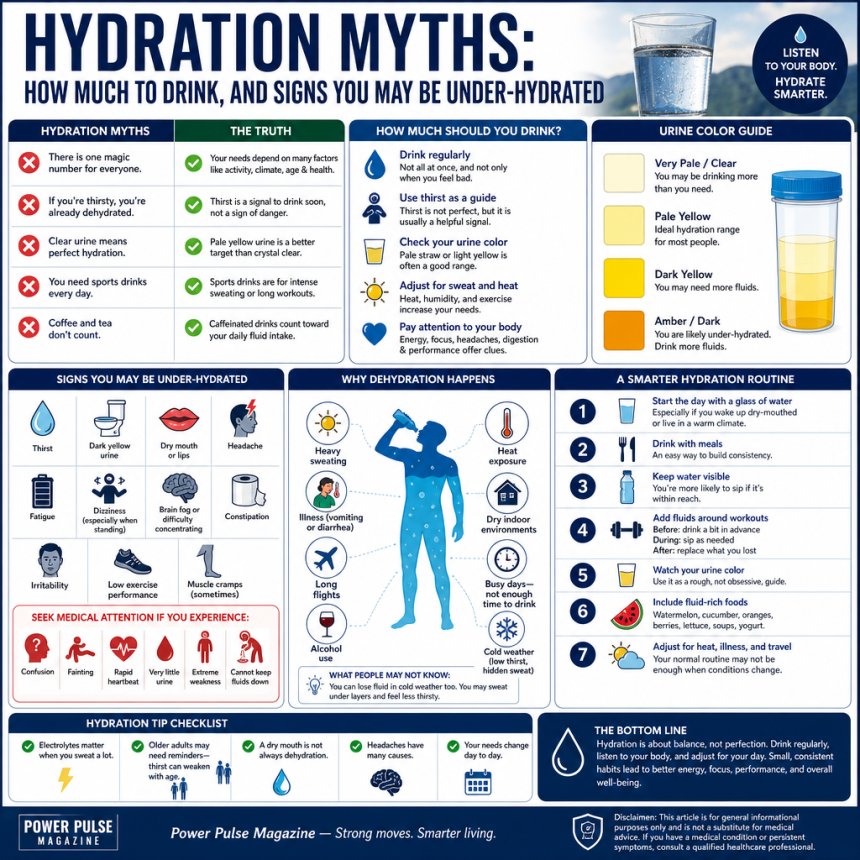
Myth #1: Everyone Needs Eight Glasses of Water Every Day
Perhaps the most famous hydration recommendation is the "8 glasses a day" rule.
While it's easy to remember, it was never designed as a universal prescription.
Your hydration needs increase or decrease depending on:
- Physical activity
- Outdoor temperatures
- Humidity
- Illness
- Pregnancy or breastfeeding
- High-protein or high-sodium diets
- Certain medications
- Individual health conditions
What many people don't realize
Water isn't your only source of hydration.
Many foods naturally contain significant amounts of water, including:
- Watermelon
- Cucumbers
- Oranges
- Strawberries
- Tomatoes
- Lettuce
- Celery
- Soups
- Yogurt
These foods contribute meaningfully toward your daily fluid intake.
How Much Water Do You Really Need?
Rather than chasing one specific number, experts generally recommend focusing on consistent hydration throughout the day.
A practical routine includes:
- Drinking fluids regularly instead of waiting until you're extremely thirsty.
- Paying attention to thirst as one useful signal.
- Checking urine color occasionally—pale yellow is generally a good sign of adequate hydration.
- Increasing fluid intake during hot weather or exercise.
- Listening to your body's energy, concentration, digestion, and recovery.
Important Medical Note
People living with kidney disease, heart failure, or other medical conditions—or those who are pregnant—may have different hydration requirements and should follow guidance from their healthcare provider.
Myth #2: If You're Thirsty, You're Already Dehydrated
This statement is partly true—but often exaggerated.
Thirst is your body's natural reminder that it wants more fluid.
Feeling thirsty doesn't automatically mean you're severely dehydrated.
For most healthy adults, it simply means it's time to drink.
An overlooked fact
Older adults often experience a weaker thirst response, making dehydration easier to miss.
Myth #3: Crystal Clear Urine Means You're Perfectly Hydrated
Not necessarily.
Dark urine may indicate you need more fluids.
However, urine that is consistently crystal clear can sometimes suggest you're drinking more water than your body actually requires.
For many healthy people, pale yellow urine is a more practical hydration goal.
Myth #4: Everyone Needs Electrolyte Drinks
Electrolytes have an important role—but they aren't necessary for every bottle of water you drink.
Electrolyte replacement becomes more useful when you:
- Exercise intensely for long periods
- Sweat heavily
- Spend extended time outdoors in summer heat
- Recover from vomiting or diarrhea
- Lose significant sodium through prolonged activity
For everyday hydration, plain water remains an excellent choice.
Myth#5: You need sports drinks every day
Usually, no.
Sports drinks are useful when you are:
- exercising hard for longer periods
- sweating heavily
- training in heat
- losing a lot of sodium through sweat
- recovering from significant fluid and electrolyte loss
But for normal daily hydration, plain water is often enough.
Tip: If your workout is under an hour and not especially intense, water is usually the simplest choice.
Myth #6: Coffee and Tea Don't Count
They absolutely count.
Moderate amounts of coffee and tea contribute toward your total daily fluid intake.
While caffeine may slightly increase urination for some individuals, research shows moderate consumption doesn't automatically cause dehydration in healthy adults.
Balance remains the key.
Signs You May Be Under-Hydrated
Dehydration doesn't always begin with extreme thirst.
Common early symptoms include:
- Increased thirst
- Dry mouth
- Dry lips
- Dark yellow urine
- Fatigue
- Headaches
- Brain fog
- Difficulty concentrating
- Muscle cramps
- Constipation
- Irritability
- Reduced exercise performance
Warning Signs That Require Medical Attention
Seek immediate medical care if dehydration is accompanied by:
- Confusion
- Fainting
- Rapid heartbeat
- Very little urine
- Extreme weakness
- Inability to keep fluids down
- Symptoms of heat exhaustion or heat stroke
Subtle Symptoms People Often Overlook
Some hydration problems disguise themselves as everyday frustrations.
These may include:
- Afternoon headaches
- Feeling sluggish after lunch
- Dry eyes
- Persistent bad breath
- Increased food cravings
- Trouble concentrating
- Workouts feeling unusually difficult
- Recurring constipation
While these symptoms can have many causes, hydration may be one contributing factor worth considering.
Why You Can Still Become Dehydrated
Hydration isn't only about how much water you drink.
It's also about how much fluid your body loses.
Common causes include:
- Heavy sweating
- Hot summer weather
- Long-distance travel
- Air travel
- Alcohol
- Diarrhea or vomiting
- Dry indoor environments
- Busy workdays where drinking water gets forgotten
Even winter months can increase dehydration risk because people often feel less thirsty despite still losing fluids.
Finding the Right Balance
Both too little and too much water can create problems.
Drinking excessive amounts in a short period can dilute sodium levels in the blood—a rare but potentially serious condition known as water intoxication or hyponatremia.
Hydration works best when it's balanced—not excessive.
A Smarter Summer Hydration Routine
Simple habits often produce the best long-term results.
Try to:
- Begin your morning with a glass of water.
- Drink with meals.
- Keep a reusable water bottle nearby.
- Drink before, during, and after exercise.
- Monitor urine color occasionally.
- Eat water-rich fruits and vegetables daily.
- Increase fluids during heat waves, travel, and illness.
Small habits repeated consistently usually outperform dramatic hydration challenges.
Hydration & Athletic Performance
Even mild dehydration may affect:
- Physical endurance
- Strength
- Muscle recovery
- Mental focus
- Reaction time
- Mood
- Coordination
Whether you're walking, lifting weights, playing sports, or working outside, proper hydration supports both physical and mental performance.
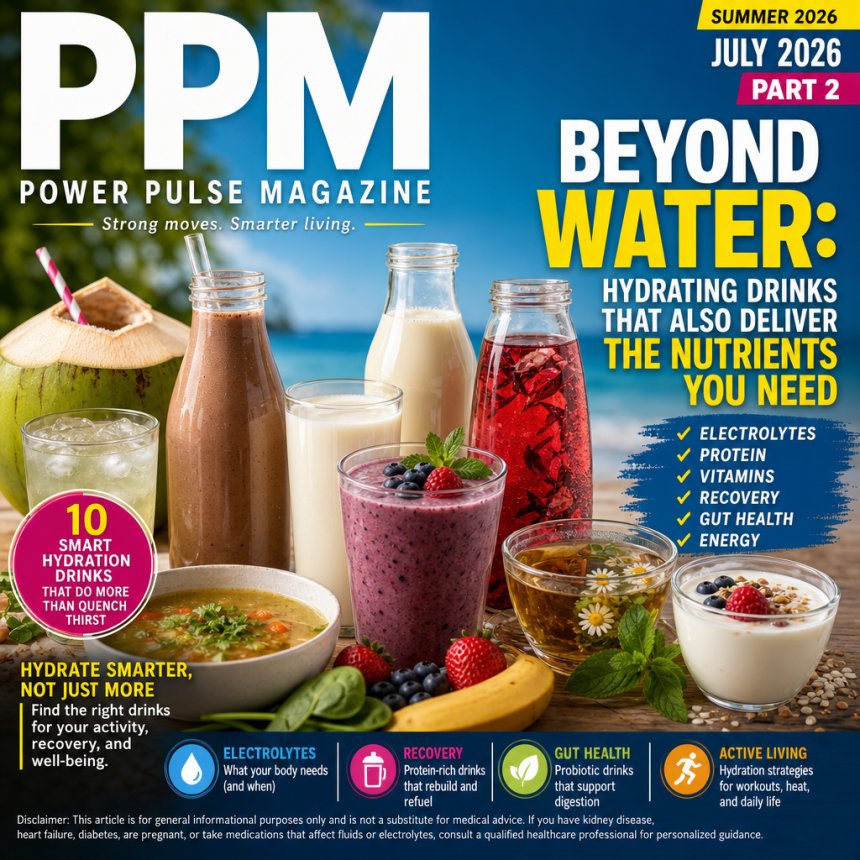
Graphic designs / Magazine cover layout by: PPM Creative Team
PPM Takeaway
Hydration isn't about drinking as much water as possible—it's about giving your body the right amount of fluids at the right time.
Understanding your personal hydration needs, recognizing the early signs of dehydration, and building simple, sustainable hydration habits can improve your energy, sharpen your focus, support recovery, and help you feel your best throughout Summer 2026.
The healthiest hydration routine isn't the most complicated.
It's the one you can maintain consistently.
Power Pulse Magazine Disclaimer
Editorial Disclaimer: This article is intended for informational and educational purposes only and should not be considered medical advice, diagnosis, or treatment. Always consult a qualified healthcare professional before making significant changes to your diet, hydration, exercise routine, or health regimen, especially if you have an underlying medical condition, are pregnant or breastfeeding, or take prescription medications.
Editorial Standards: This feature was researched using reputable public health and medical resources. Editorial assistance from AI tools was used during the research and production process. All content has been reviewed, fact-checked, and edited by a human editor to meet Power Pulse Magazine's editorial standards. Final editorial oversight and creative direction are provided by Power Pulse Magazine.
Disclaimer:
This article is intended for general informational purposes only and should not be considered medical advice. Individual hydration needs vary based on age, health conditions, medications, activity level, and environmental factors. Consult a qualified healthcare professional if you have persistent symptoms or questions regarding your hydration or overall health.
Power Pulse Magazine — Strong Moves. Smarter Living.
2026 Power Pulse Magazine. All Rights Reserved. Reproduction or redistribution of this content, in whole or in part, without prior written permission is prohibited.
Share
What's Your Reaction?
 Like
1
Like
1
 Dislike
0
Dislike
0
 Love
1
Love
1
 Funny
0
Funny
0
 Angry
0
Angry
0
 Sad
0
Sad
0
 Wow
1
Wow
1